

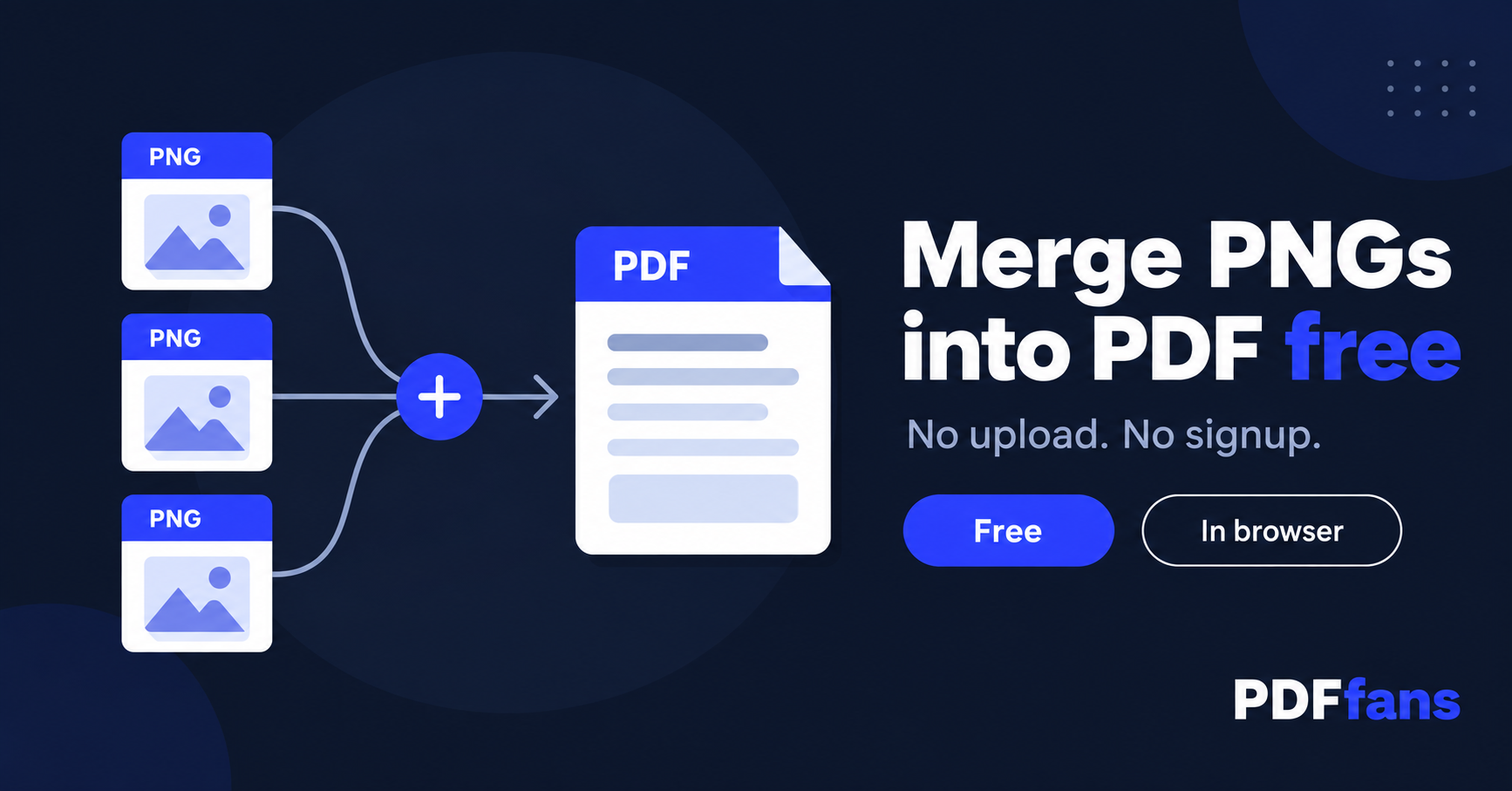
How to Merge Multiple PNG Files into One PDF
If you've got a stack of PNG screenshots, scanned pages, or design exports sitting in a folder, sending them one by one is a bad look. The fix is simple: merge multiple PNG files into one PDF and share a single, ordered document instead. This guide walks through doing it in under a minute, directly in your browser, without installing anything or uploading your files to a server.
Why Combine PNG Images Into a Single PDF
A folder of loose images is hard to review, print, or archive. A PDF fixes that — it keeps every image in a fixed order, opens the same way on any device, and prints cleanly without someone having to click through ten separate files. This matters most for bug report screenshots, scanned documents, design mockups sent for approval, and receipts collected over a trip.
Step-by-Step: Merge PNGs Into One PDF
- Open the PNG to PDF tool — no account needed.
- Drag in all the PNG files you want combined, or click to browse and select them at once.
- Drag the thumbnails into the order you want them to appear as PDF pages.
- Pick page orientation (portrait or landscape) if your images aren't uniform.
- Click convert. The PDF builds right in your browser — nothing leaves your device.
Controlling Image Order and Page Layout
Order matters more than people expect. If your PNGs are named sequentially (page-01.png, page-02.png…), most browsers upload them in that order already. If they aren't, reorder the thumbnails manually before converting — fixing page order after the PDF exists means redoing the whole thing. For scans with a mix of portrait and landscape photos, landscape mode on the whole batch usually looks cleaner than mixing orientations page to page.
PDFfans vs. Uploading to a Cloud Converter
Most PNG-to-PDF tools, including iLovePDF and Smallpdf, upload your images to a server, convert them there, then send the file back. That's fine for public screenshots, but not for scanned IDs, contracts, or anything private. PDFfans processes everything client-side — the merge happens in your browser's memory, and the files never touch a server. The trade-off is honest: very large batches (50+ high-resolution images) will lean on your device's memory more than a cloud service would, since there's no server doing the heavy lifting.
Common Mistakes When Merging PNGs
- Converting one PNG at a time instead of batching them — slower and easy to lose track of order.
- Not checking page order before converting, then having to start over.
- Ignoring transparency — PNGs with transparent backgrounds render as white in the final PDF, which can look wrong on logos or diagrams. Flatten the background first if that matters.
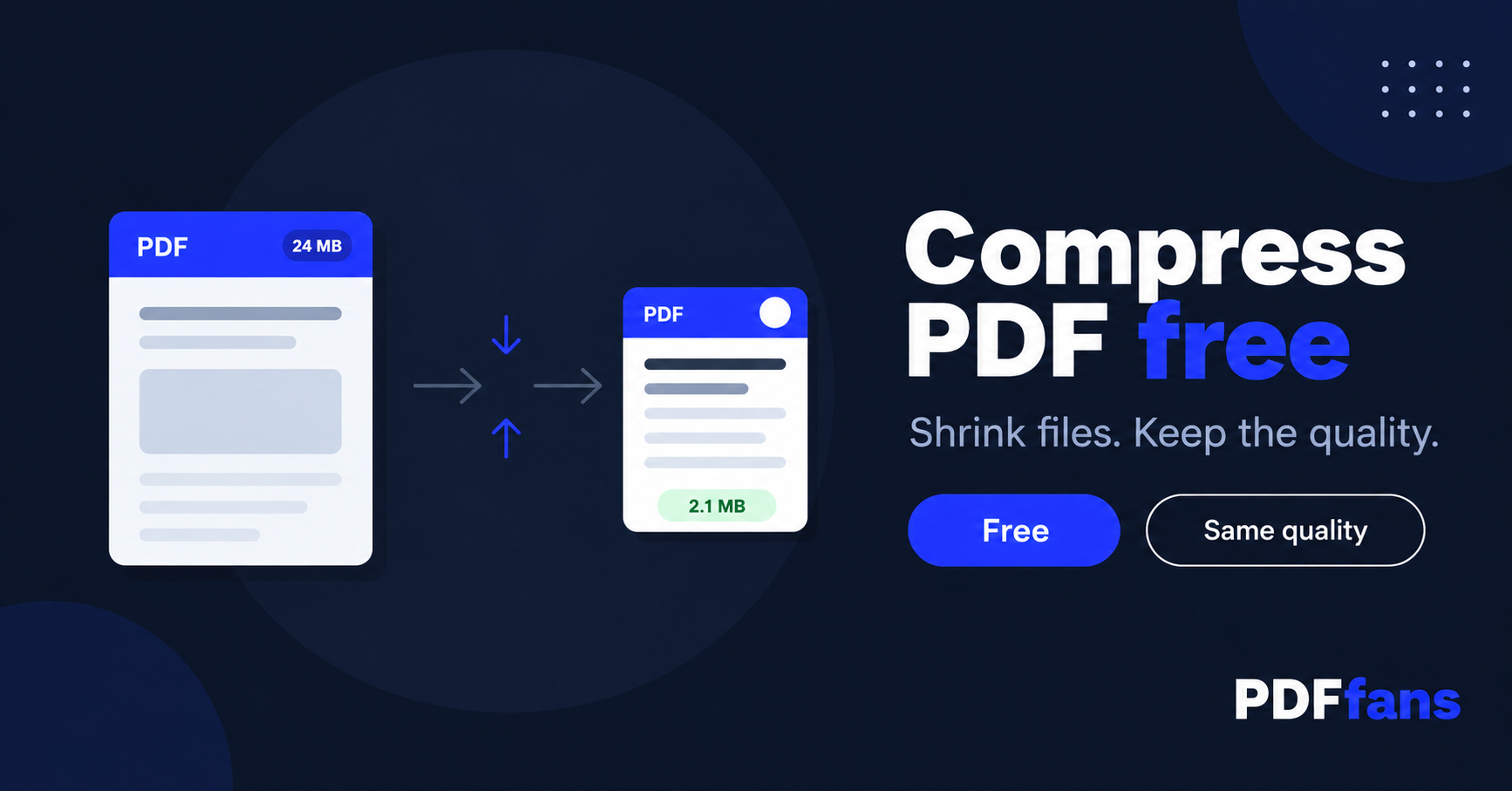
- Skipping compression on very large image batches, resulting in a PDF that's too heavy to email.
FAQ
Can I merge PNGs with different sizes into one PDF?
Yes. Each PNG becomes its own page sized to fit, so mismatched dimensions don't break the layout.
Is there a limit to how many PNGs I can merge?
No fixed cap on the free tier. Very large batches just take longer since everything processes on your device.
Will merging reduce the image quality?
No. Images are embedded at their original resolution unless you're also compressing.
Do I need to sign up to merge PNGs into a PDF?
No signup, no email required. Upload, order, convert, download.
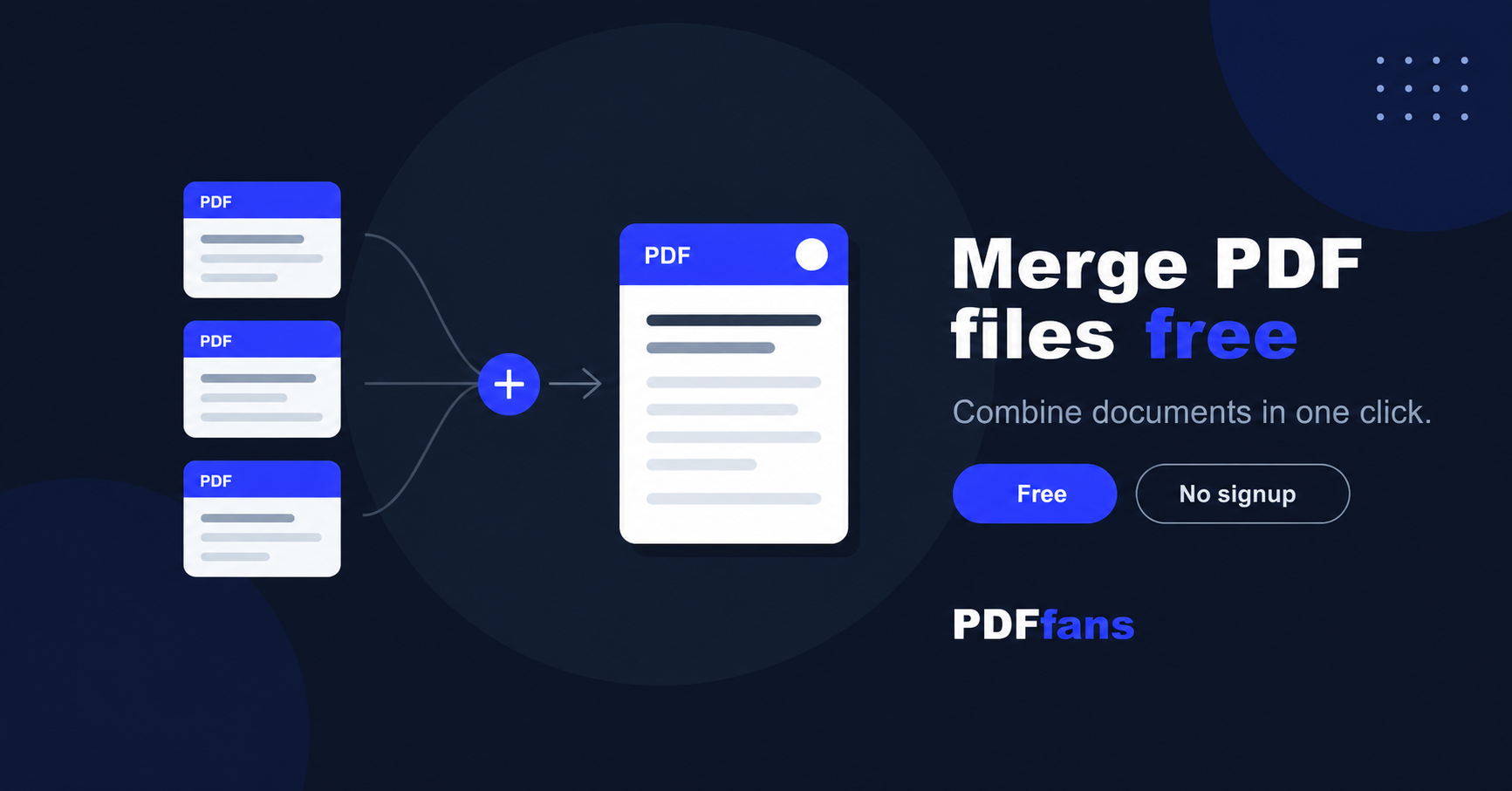
For related tasks, see JPG to PDF if your files are JPGs, or Merge PDF if you're combining existing PDFs rather than images. For background on the format itself, see the Wikipedia entry on PDF.
Comments
Leave a Comment